
By Dr. Thomas Lien, DDS
Yes, Invisalign can fix many cases of crowding. When crowding is mild to moderate, clear aligners can create space, guide teeth into better positions, and produce noticeable changes over time. Some cases are more complex and may respond better to braces, so the real answer depends on how severe the crowding is, how the bite fits together, and what kind of movement is needed.
Crowding is not just about teeth looking crooked in photos. It usually means there is not enough room for teeth to line up properly. That can lead to overlap, rotation, teeth sitting behind one another, and a bite that does not fit together as cleanly as it should. If you are looking into Invisalign in Manhattan and Brooklyn, NY because your teeth feel crowded, the key question is whether aligners are the right treatment for your specific kind of crowding.
What Crowded Teeth Really Mean
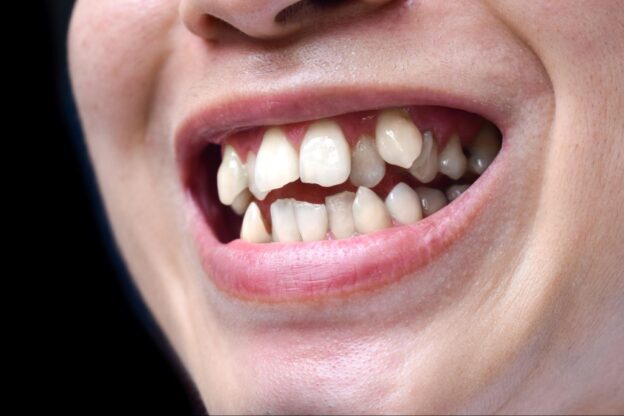
Crowding happens when there is not enough space in the jaw for teeth to settle into proper alignment. It can show up in several ways:
- front teeth overlapping
- teeth that look rotated or tucked behind others
- a narrow-looking smile
- difficulty flossing between certain teeth
- teeth that feel harder to clean well
- visible crowding along with a bite that feels off
In some people, crowding is mostly cosmetic. In others, it is tied to more involved alignment or bite problems. That difference affects how predictable Invisalign will be.
When Invisalign Can Be a Strong Option

Invisalign works by using a series of custom aligners to make small, controlled movements over time. Those gradual changes can reduce overlap, improve spacing, and create a more even smile.
Invisalign is often a strong option when:
- crowding is mild to moderate
- the bite does not need major correction
- the patient can wear aligners consistently
- a more discreet treatment option is preferred
- the case is being planned and monitored carefully
When Braces May Be the Better Choice
Invisalign can do a lot, but it is not the best answer for every crowded smile.
Braces may be the better option when:
- crowding is severe
- teeth need more controlled movement
- the bite needs significant correction
- rotations are more stubborn
- the case is part of a more complex orthodontic problem
That is why the decision should come from the case itself, not from appearance alone. Some smiles are a natural fit for clear aligners. Others respond better to braces because braces can give more direct control over how teeth move.
Invisalign vs Braces for crowding summary:
| Treatment Factor | Invisalign | Braces |
| Mild crowding | Often a very good option | Very effective |
| Moderate crowding | Often effective | Very effective |
| Severe crowding | Case-dependent | Often the stronger option |
| Visibility | Very discreet | More noticeable |
| Removability | Yes | No |
| Discipline required | High | Lower |
| Complex bite correction | Case-dependent | Often better suited |
What Before-and-After Results Usually Depend On
Before-and-after changes with Invisalign depend on several factors working together.
1. How crowded the teeth are
Minor overlap is generally easier to correct than severe crowding with very limited space.
2. Whether the bite is involved
A crowded smile with overbite, underbite, or crossbite issues may need a broader treatment plan.
3. How consistently the aligners are worn
Invisalign only works as intended when the aligners are worn as directed. Inconsistent wear can slow progress and reduce predictability.
4. How well the case is planned
Aligners are only as good as the treatment plan behind them. Strong results depend on strong orthodontic judgment.
Two patients may both have crowding and still need very different treatment. One may be a straightforward aligner case. Another may need braces or a more advanced approach.
What Before-and-After Results Often Show

When Invisalign works well for crowding, before-and-after results often show:
- less overlap in the front teeth
- improved spacing and alignment
- a more even smile line
- teeth that are easier to clean
- a bite that fits together more comfortably
The improvement can look cosmetic on the surface, but it is often more practical than that. Straighter teeth are usually easier to brush, easier to floss, and easier to maintain over time.
How Invisalign Treats Crowding Step by Step
- Consultation and exam
The teeth and bite are evaluated to see whether Invisalign is a good fit. - Digital scan and treatment planning
The smile is mapped out so tooth movement can be planned properly. - Custom aligners are made
Each set is designed to guide the next phase of movement. - Teeth move gradually over time
Aligners are changed on schedule and worn as directed. - Progress checks
Treatment is monitored to make sure the teeth are moving the way they should. - Retention after treatment
Retainers help protect the result once the crowding has been corrected.
Patients who want a more flexible treatment experience often like this process, especially when they want to keep orthodontic treatment more discreet. For patients who also want shorter treatment times where appropriate, House of Orthodontia offers accelerated orthodontics as part of our broader treatment philosophy.
Is Invisalign a Good Option for Adults With Crowding?
Very often, yes.
Adults commonly choose Invisalign because they want a lower-profile way to improve crowded teeth without the look of metal braces. Aligners can be especially appealing for work, social settings, and everyday convenience. For adults who have put off treatment for years, they can feel like a more approachable place to start.
Why the Right Evaluation Matters
Crowding can look simple from the outside and still involve more than expected. A smile may appear to need only a little straightening, but the bite, rotations, or available space may make the case more involved.
A proper orthodontic evaluation helps answer the questions that actually matter:
- Is the crowding mild, moderate, or severe?
- Is the bite involved too?
- Can Invisalign handle the case well?
- Would braces create a stronger result?
- What kind of timeline makes sense?
Those answers turn a general question into a real treatment decision.
A Smarter Way to Decide
Invisalign can correct many cases of crowding, and for the right patient it can produce very strong before-and-after results. Mild and moderate crowding often respond well to clear aligners, and some more involved cases can also be treated successfully when the plan is strong and the aligners are worn properly.
But not every crowded smile should be treated with Invisalign. Some cases still call for braces or a more advanced orthodontic approach. The best next step is a real evaluation that looks closely at the crowding, the bite, and the kind of result that will hold up well over time. At House of Orthodontia, Dr. Thomas Lien, DDS plans treatment with that full picture in mind, helping patients decide whether Invisalign or braces is the better fit for a healthier, more balanced smile.
FAQs
Can Invisalign fix severely crowded teeth?
Sometimes, but not always. Severe crowding may still be better treated with braces or a more involved orthodontic plan, depending on how much space is needed and the type of movement required.
Is Invisalign faster than braces for crowded teeth?
It can be in some cases, but not by default. The timeline depends on how crowded the teeth are, whether the bite is involved, and how consistently the aligners are worn.
Does Invisalign hurt when treating crowding?
Most patients feel pressure more than pain, especially when switching to a new set of aligners. That pressure usually means the teeth are moving.
Can adults use Invisalign for crowded teeth?
Yes. Invisalign is a common choice for adults who want a more discreet way to improve crowded teeth and overall smile alignment.
What happens if Invisalign is not enough for my crowding?
If aligners are not the best fit, braces or another orthodontic approach may be recommended instead. The goal is the right result, not forcing the same treatment on every case.
How do I know whether Invisalign can fix my crowding?
The best way is to schedule a consultation. An orthodontic evaluation can show how much crowding is present, whether the bite is involved, and whether Invisalign is likely to be the right option.

