
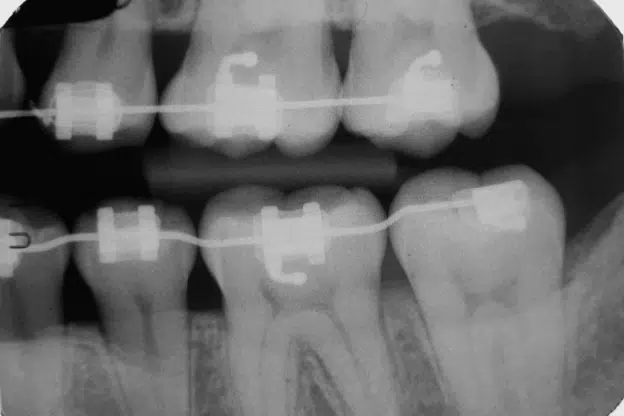
Many patients begin orthodontic care without fully understanding what is happening beneath the surface of their smile. Teeth may appear solid and immovable, yet over time they shift into healthier alignment with remarkable precision. This transformation is not random or force-driven. It is guided by carefully planned biomechanics that work in coordination with the body’s natural biological processes.
Understanding how braces move teeth helps explain why orthodontic care takes time, why pressure must be applied gradually, and why consistency is essential throughout treatment. Traditional braces are designed to guide teeth safely by triggering controlled biological responses rather than pushing teeth aggressively through bone.
This article explains how braces move teeth step by step by examining force application, tissue response, and bone remodeling. By understanding each phase, patients gain clarity on what makes braces predictable, effective, and biologically safe.
Step 1 – Metal Braces Apply Controlled Orthodontic Force
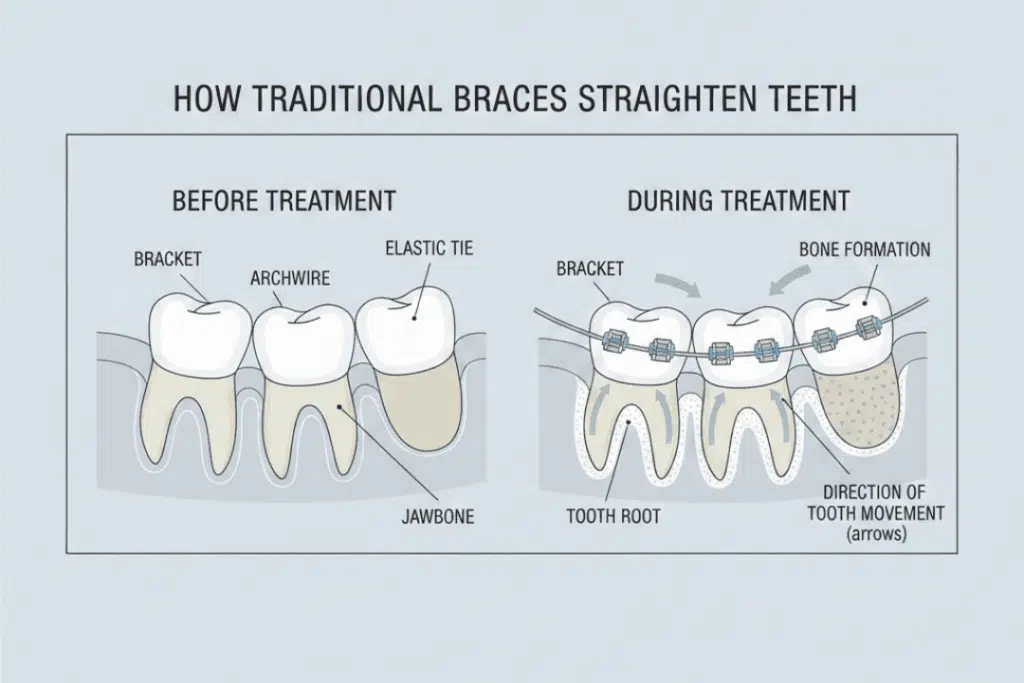
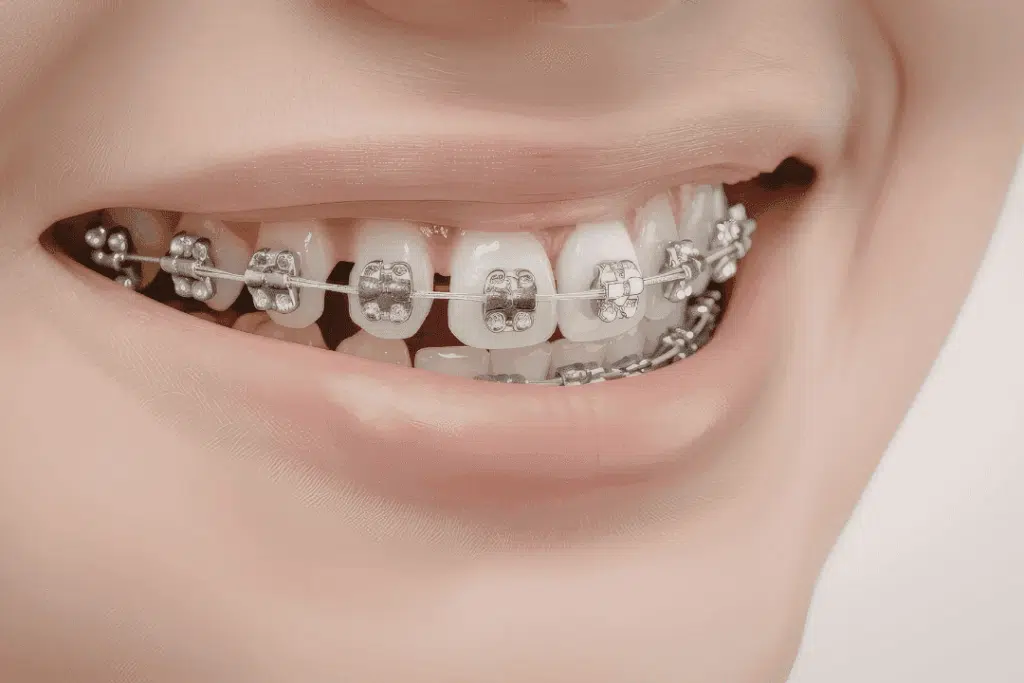
Traditional braces function as a coordinated biomechanical system. Brackets, archwires, and ligatures are engineered to work together, delivering light and continuous pressure to the teeth. This pressure initiates orthodontic tooth movement while protecting the surrounding bone and roots.
The science behind metal braces mechanics focuses on consistency rather than strength. Teeth respond best to gentle force applied over time, which allows biological adaptation to occur safely. Because braces remain fixed in place, orthodontists can guide force continuously instead of relying on daily patient actions.
This first step establishes the foundation for predictable braces tooth movement, ensuring that alignment begins in a controlled and stable manner.
Step 2 – Brackets and Archwires Direct Tooth Position
Brackets are bonded to each tooth based on its ideal final position. Their placement is precise and calculated to ensure that force is delivered in the correct direction. Once bonded, brackets act as anchors that receive force from the archwire and transmit it directly to the tooth.
Archwires are shaped to represent ideal alignment. When engaged, they attempt to return to that shape, generating pressure that moves teeth gradually. This interaction is central to understanding how metal braces work, particularly as orthodontists adjust wire size and stiffness throughout treatment.
Together, brackets and archwires allow orthodontists to manage rotation, spacing, angulation, and vertical movement key components of orthodontic tooth movement.
Step 3 – The Periodontal Ligament Responds to Pressure
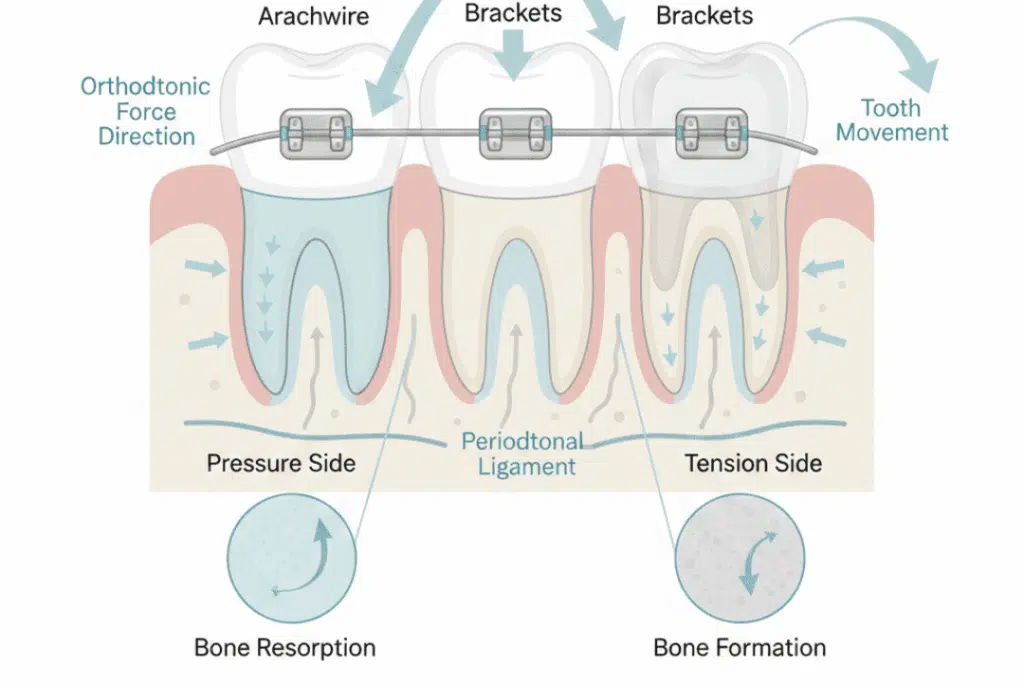
Teeth are not fused directly to bone. They are suspended by the periodontal ligament, a microscopic structure that absorbs orthodontic force and communicates with surrounding bone tissue. When pressure is applied, one side of the ligament compresses while the opposite side stretches.
This pressure-and-tension response triggers cellular activity that allows teeth to shift gradually. This biological reaction explains how braces move teeth without damaging roots or surrounding structures. Mild soreness after adjustments often occurs during this phase and is a normal indicator that force has been applied correctly.
This stage is critical to controlled braces tooth movement, ensuring that teeth move in response to biology rather than mechanical force alone.
Step 4 – Bone Remodeling Allows Teeth to Shift Safely
Bone remodeling is the biological process that makes orthodontic tooth movement possible. On the pressure side of the tooth, bone is slowly resorbed. On the tension side, new bone forms to stabilize the tooth in its new position.
This gradual process explains why orthodontic care cannot be rushed. The success of metal braces mechanics depends on allowing bone to adapt naturally over time. Accelerating force beyond biological limits can compromise stability and root health.
Bone remodeling completes the cycle that explains how braces move teeth safely from initial pressure to final alignment.
Why Adjustments Are Necessary for Continued Progress
As teeth reposition, the forces acting on them change. Orthodontic adjustments are required to recalibrate pressure and keep movement progressing in the intended direction.
Adjustments may involve replacing archwires, modifying ligatures, or introducing auxiliary components. These changes ensure that how metal braces work remains aligned with the current stage of treatment. Without adjustments, force levels may become ineffective or misdirected.
Regular appointments support steady braces tooth movement and help prevent unnecessary delays.
Understanding the Timeline of Tooth Movement
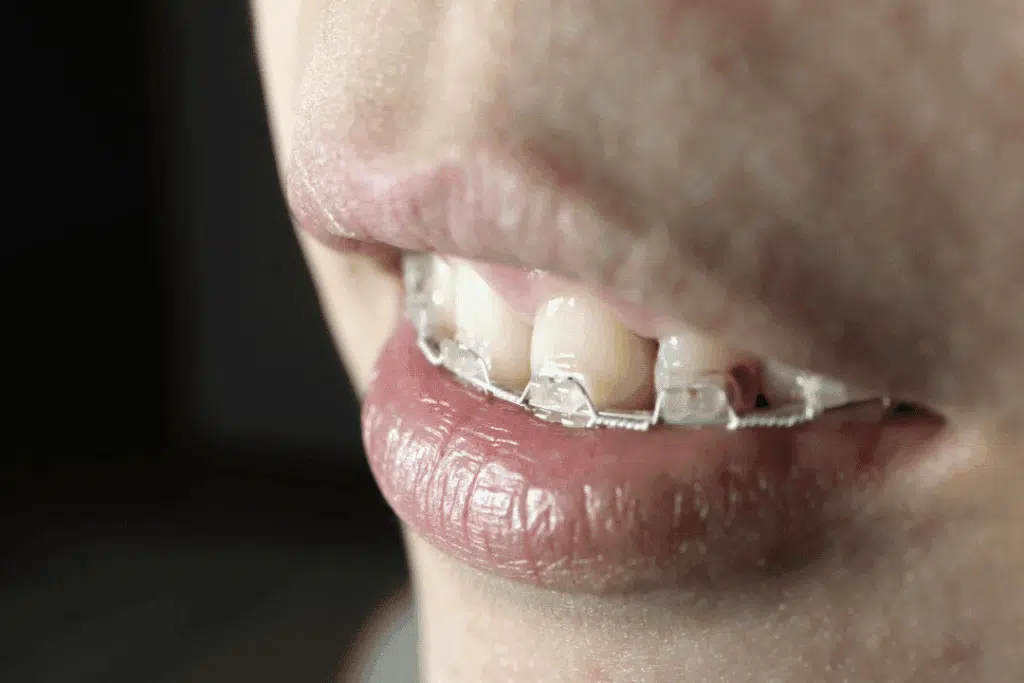
Orthodontic alignment occurs in stages rather than all at once. Early changes may be visible within weeks, but full alignment develops gradually over months or longer, depending on complexity.
Each phase builds on the previous one, allowing bone and tissues to adapt safely. This staged timeline reflects the biology behind orthodontic tooth movement, not mechanical speed. Consistency and patience are essential for long-term stability.
Understanding this timeline helps patients develop realistic expectations for how long braces move teeth actually takes.
Why Traditional Metal Braces Remain Predictable
Traditional braces continue to be widely used because their biomechanics are well understood and highly controllable. Orthodontists can manage multiple movements at the same time with precision, which is especially important for complex alignment and bite correction cases.
The predictability of metal braces mechanics allows orthodontists to anticipate movement and adjust treatment proactively. Their effectiveness comes from precision rather than force, making them a reliable option across a wide range of cases.
This predictability reinforces why traditional braces remain a trusted orthodontic solution.
FAQs About How Braces Move Teeth
How soon does braces tooth movement begin?
Most patients notice early changes within the first few weeks, but biological adaptation continues throughout treatment.
Why do teeth feel sore after adjustments?
Soreness occurs when the periodontal ligament responds to new pressure, a normal part of orthodontic tooth movement.
Can braces move teeth too quickly?
Teeth should never move too fast. Controlled force protects bone and roots and explains how metal braces work safely.
Do braces work the same way for adults and teens?
The biomechanics are the same, though bone density and remodeling speed may vary slightly with age.
Schedule an Orthodontic Consultation with House of Orthodontia
House of Orthodontia provides orthodontic care rooted in science, precision, and patient education. All treatment plans are overseen by Dr. Thomas Lien, DDS, MS, a board-certified orthodontist with advanced training in biomechanics, bite correction, and long-term smile stability.
For patients who want a clearer understanding of how braces move teeth and what to expect throughout care, House of Orthodontia offers personalized consultations. The practice proudly serves Manhattan and Brooklyn. Schedule an appointment today to receive expert guidance and individualized orthodontic care.